

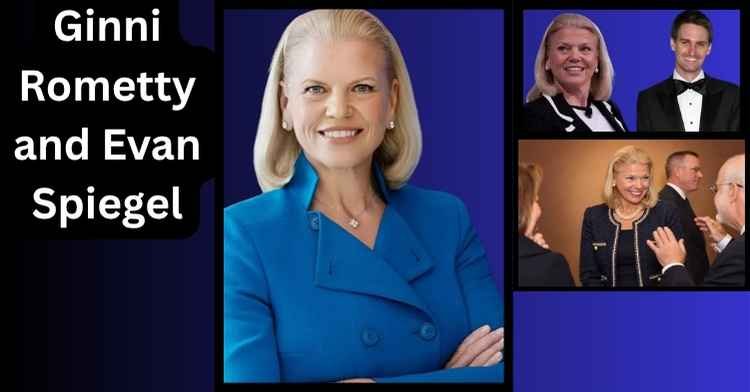
Ginni Rometty and Evan Spiegel lead in very different worlds, yet both changed how people use technology. One guided a century old giant through hard change. The other built a camera app that became a daily habit for millions.
This Ginni Rometty vs Evan Spiegel leadership guide looks at their backgrounds, choices, and results. It also shows why technology leadership feels so different inside an old company and a young one.
Quick Bio Table
A quick bio table helps before we get into details. It puts the basic facts for both leaders side by side, so the rest of the article is easier to follow.
Think of it as a short Ginni Rometty and Evan Spiegel comparison at a glance. Later sections explain each row in more depth.
- Both reached the top job of a major tech company
- One came up through decades inside a firm, the other started a firm
- Both studied at well known universities
- Their public stories look very different
Read More: Frank Sinatra and Kendall Jenner: No Family Tie, Just One adidas Ad
| Detail | Ginni Rometty | Evan Spiegel |
|---|---|---|
| Full name | Virginia M. Rometty | Evan Thomas Spiegel |
| Born | July 29, 1957, Chicago | June 4, 1990, Los Angeles |
| University | Northwestern University | Stanford University |
| Best known for | Leading IBM | Co founding Snapchat |
| Top role | Former CEO and chair of IBM | CEO of Snap Inc. |
| Time at top | 2012 to 2020 | Since the company’s early days |
Who Is Ginni Rometty?
Meet Ginni Rometty, a business leader who spent about four decades at one company. If you wonder who is Ginni Rometty, think of an engineer who rose to run IBM.
This Ginni Rometty biography covers her early life, her rise, her style, and what she’s done since. She was the first woman to lead IBM.
- Born in Chicago in 1957
- Spent roughly forty years at IBM
- Became a former IBM CEO in 2020
- Wrote a book on leading with purpose
Ginni Rometty’s Early Life and Education
She grew up in Chicago, where her mother raised the family on a tight budget. That shaped her habits early. Her Ginni Rometty education story starts at Northwestern University.
She studied computer science and electrical engineering and graduated in 1979. That technical base helped her talk with engineers and clients later.
- Raised in the Chicago area
- Studied computer science and engineering
- Finished with high honors
- Started her career soon after graduating
Ginni Rometty’s Career and Leadership at IBM
Her Ginni Rometty career began at IBM in 1981 as a systems engineer. She moved into sales and consulting, and later worked across IBM Global Services teams.
In 2002 IBM bought PricewaterhouseCoopers Consulting, and she helped merge it into IBM Global Business Services. That deal made her a rising name inside the company.
- She became CEO in January 2012
- Later held the titles of chairman, president, and chief executive officer
- When did Ginni Rometty become CEO? The answer is 2012
- As Ginni Rometty IBM CEO, she led through a hard stretch
Ginni Rometty’s Leadership Style and Professional Philosophy
Ginni Rometty leadership at IBM was calm, direct, and client focused. She often said growth comes from being uncomfortable, and she pushed teams to learn new skills fast.
She built an enterprise technology strategy around data and trust. She also moved the company toward data driven business services for large customers.
- Stayed close to clients
- Valued learning over comfort
- Spoke openly about change
- Treated data as a core business asset
Ginni Rometty’s Work Beyond the CEO Position
She backed the P-TECH education model, a school plan that mixes high school, college courses, and work experience. It aims to open doors for students who lack them.
She also cares about workforce development. Through OneTen, she helps connect Black talent to good jobs. That technology education and career preparation work continues today.
- Supports skills based hiring
- Promotes school to work paths
- Shares leadership ideas through writing and talks
- Serves on boards and advisory groups
What Happened to Ginni Rometty?
Many people ask when did Ginni Rometty retire. She stepped down as CEO in April 2020 and left the chair role at the end of that year.
Arvind Krishna took over as CEO. She has stayed active since, focusing on hiring, education, and advising other leaders.
- CEO role ended in 2020
- Chair role ended later that year
- Still active in public causes
- Not retired from work in a full sense
Who Is Evan Spiegel?
Now to Evan Spiegel. If you ask who is Evan Spiegel, he’s a young founder who turned a simple idea into a global app. This Evan Spiegel biography moves from school days to the corner office.
He’s best known as the Evan Spiegel Snapchat founder and today works as the Evan Spiegel Snap CEO. He started young and has stayed in charge.
- Co founded Snapchat in his early twenties
- Leads the company as CEO
- Helped shape digital communication for a generation
- Bets heavily on new hardware
Evan Spiegel’s Early Life and Educational Background
Evan Thomas Spiegel grew up in Los Angeles. Checking Evan Spiegel age today, he’s 36, and his Evan Spiegel birthday (June 4, 1990) makes him one of the youngest leaders in big tech.
His Evan Spiegel Stanford years began at Stanford University, where he studied product design. There he met Bobby Murphy, his future partner.
- Born in Los Angeles
- Studied product design
- Met his co founder at Stanford
- Left to focus on the app
The Creation and Growth of Snapchat
How Snapchat started is a simple tale. A class project grew into a messaging idea, and Snapchat launched in 2011 with disappearing photo and video messages.
The Snapchat growth story picked up fast with teens. People liked sharing moments without keeping a permanent record.
- Stories arrived in 2013
- Camera filters made photos playful
- Young users drove early traction
- The app became a social communication platform
Evan Spiegel’s Leadership Style and Business Approach
His style leans on design, taste, and bold bets. He cares about product innovation and often ignores trends others copy. That has been his steady approach at Snap Inc.
His Snap Inc. strategy puts the camera first, not the feed. As a public company leader, he also has to protect shareholder value and explain choices to investors.
- Design led decisions
- Camera first thinking
- Willing to say no to copycat features
- Pressure from investors on results
Evan Spiegel’s Interest in Augmented Reality
Evan Spiegel augmented reality work starts with a belief that the camera can do more than take pictures. Augmented reality (AR) places digital effects over the real world.
That belief shaped augmented reality lenses, which let people add faces, animals, and games to live video. It also shaped camera based social experiences that feel more playful than a plain photo.
- Lenses became a signature feature
- AR sits at the center of his plans
- He sees the camera as the main tool
- Hardware is the next step
Is Evan Spiegel Still a Billionaire?
By most public estimates, yes. His wealth rises and falls with Snap’s share price, so the exact number changes often. Check a live ranking for today’s figure.
The public listing in 2017 made his stake easy to value. That’s the answer to when did Snap go public. Strong revenue and profitability would help his net worth more.
- Wealth tied to Snap stock
- IPO happened in March 2017
- Numbers shift daily
- Rankings differ by source
Who Is Evan Spiegel’s Wife?
His wife is Miranda Kerr, the Australian model and founder of a skincare brand. They married in 2017 and have children together.
They keep much of their family life private. That fits his general habit of sharing product news more than personal details.
- Married in 2017
- Kerr runs her own business
- They have sons
- Family life stays mostly private
What Religion Is the Snapchat CEO?
He hasn’t made his religion a public topic. There’s no reliable statement from him, so it’s best not to guess or repeat rumors.
That choice is fair. A leader’s faith has no bearing on how well he runs a company, and he’s allowed to keep it private.
- No public statement
- Avoid unverified claims
- Not tied to his business role
- Respect personal privacy
Ginni Rometty and Evan Spiegel: Comparing Their Leadership Styles and Professional Differences
Rometty ran an established corporation with a long history, large clients, and slow moving contracts. Spiegel ran startup growth from the first line of code, with fast users and thin margins.
Their Ginni Rometty and Evan Spiegel achievements reflect that gap. One reshaped a giant through corporate transformation. The other pushed entrepreneurial innovation that changed how friends talk.
- One inherited a legacy, one built a new one
- One sold to businesses, one sold to consumers
- Both had to prove their plans to investors
- Both faced public doubt
| Area | Ginni Rometty | Evan Spiegel |
|---|---|---|
| Company type | Established corporation | Founder led startup |
| Customers | Large enterprises | Everyday consumers |
| Main focus | Reinvention of a legacy firm | New camera products |
| Pace | Steady, planned shifts | Fast product cycles |
| Risk style | Careful portfolio moves | Bold product bets |
Are Ginni Rometty and Evan Spiegel Related?
No. There’s no public record of any family tie between them. They only share a spot in business talk because both led major technology firms.
People sometimes pair them because of their names in search results. That doesn’t mean a link exists.
- No family connection
- Different generations
- Different industries
- Compared only for leadership lessons
Did Ginni Rometty and Evan Spiegel Work Together?
There’s no known business partnership between them. They ran separate companies with separate goals and rarely crossed paths in work.
They may have shared stages or events, but that’s not the same as working together. Their paths simply run in parallel.
- No joint projects
- No shared company
- Separate customers and goals
- Possible event overlap only
The Influence of Ginni Rometty and Evan Spiegel on the Technology Industry
Both leaders left marks on how tech companies act. Studying their technology leaders career lessons shows how big firms and small ones can each change course.
One lesson is that markets move fast. Another is that people matter as much as products. Both ideas show up in their choices.
- Each shaped a major platform
- Both spoke about responsibility
- Both faced public pressure
- Their ideas still get discussed
What Their Careers Reveal About Innovation
Innovation can mean a new app or a new way to run a large firm. Rometty pushed artificial intelligence for business, while Spiegel pushed playful camera tools.
Neither path was easy. Both had to try new things while keeping the core business alive.
- Innovation comes in many sizes
- Business AI differs from consumer AR
- Experiments need patience
- Core products still must earn money
Leadership in a Rapidly Changing Technology Industry
Fast change is the daily reality. Success often depends on adapting to changing markets without losing the thread of what the company stands for.
For Spiegel, that meant defending a place in the social media market against giants. For Rometty, it meant moving a legacy firm toward newer demand.
- Markets shift quickly
- Rivals copy good ideas
- Customers change habits
- Focus protects identity
The Importance of Long Term Thinking
Long term planning protects a company from chasing every trend. Rometty’s multi year moves took time to show up in results, and some critics grew impatient.
Spiegel’s hardware bets also need patience. Neither leader could rely on a single quarter to judge a big idea.
- Big bets take years
- Short term pressure is real
- Boards and investors want proof
- Patience needs a clear plan
How Their Experiences Relate to Employees and Workplace Culture
Culture shapes results. Rometty focused on skills and training, and Spiegel kept a design heavy, creative team feel. Each approach fits the kind of company they run.
Workers in both firms faced change. Clear talk from leaders helps people stay steady when plans shift.
- Skills training builds trust
- Creative freedom attracts talent
- Honest updates calm teams
- Culture follows leadership habits
The Broader Influence of Technology Leaders
Leaders like these set examples for others. IBM’s work in quantum computing and cybersecurity shows a wide view, while Snap’s work in AR shows a narrow, bold one.
Their companies also touch the wider digital economy. Choices about data, safety, and jobs ripple beyond the firm itself.
- Leaders set public norms
- Research effort shapes the field
- Data choices affect users
- Jobs and skills ripple outward
Case Studies From Their Careers
Real examples teach more than theory. These three cases show how each leader handled pressure, and how their ideas can mix.
Each one points to a clear lesson. Read them as stories first, then as tools.
- IBM shows reinvention at scale
- Snapchat shows survival through difference
- A third case blends both views
- Each case has trade offs
Case Study One: IBM and the Challenge of Corporate Transformation
The IBM transformation under Rometty aimed to move the company toward newer work. Her biggest move was the IBM Red Hat acquisition, a $34 billion acquisition announced in 2018.
The deal supported hybrid cloud computing and gave IBM a stronger link to enterprise open source software. It showed that large firms can still make daring moves.
- Focus on cloud computing for business clients
- Divesting businesses that no longer fit
- Ongoing portfolio adjustments
- Mixed results drew both praise and criticism
Case Study Two: Snapchat and the Challenge of Product Differentiation
Snapchat faced copycats once its best ideas spread. Larger rivals added similar features, so the company had to stand out through its camera and its young audience.
It built creator features and new advertising products to grow income. A mobile first advertising approach fit how its users already behaved.
- Differentiation through the camera
- Support for creators
- Ads designed for phones
- Constant pressure from bigger rivals
Case Study Three: Applying Both Leadership Perspectives to a Growing Business
Imagine a small firm that grows fast. Spiegel’s habit of building around one strong idea keeps the product sharp, while Rometty’s careful planning keeps the business stable.
A clear strategic focus joins both views. The team knows what to build and what to skip, and leaders still check results often.
| Situation | Spiegel style | Rometty style | Blended approach |
|---|---|---|---|
| New product idea | Build fast and test | Study client need first | Quick test with client input |
| Market shift | Pivot toward the camera | Reposition the portfolio | Adjust with clear goals |
| Team growth | Protect creative space | Train for new skills | Mix both |
Lessons From Their Professional Journeys
Their stories offer plenty of takeaways. The lessons from Ginni Rometty and Evan Spiegel work for big firms and small ones, because both leaders faced change and doubt.
Use the next sections as a simple checklist. Each point stands alone, yet they work best together.
- Learn from both paths
- Mix patience with speed
- Keep people central
- Test ideas, then adjust
What Entrepreneurs Can Learn From Ginni Rometty and Evan Spiegel
Entrepreneurs can take lessons from Evan Spiegel about product taste and focus. They can take lessons from Ginni Rometty about planning, skills, and honest reviews.
Mixing the two builds a stronger founder. Move quickly, but know why you’re moving.
- Pick a clear product idea
- Plan for the long run
- Train your team
- Stay open to change
1. Build a Clear Sense of Direction
A team without direction drifts. Both leaders kept a simple message about where the company was heading, even when the details changed.
Write down your goal in one sentence. If a task doesn’t help, drop it.
- Set one main goal
- Share it often
- Cut tasks that don’t fit
- Review it each quarter
2. Understand the Customer
Rometty listened to business clients, and Spiegel watched how young people used their phones. Neither guessed. They studied real habits.
Talk to your own customers often. Their words reveal needs that no chart shows.
- Ask direct questions
- Watch real use
- Note repeated complaints
- Act on what you learn
3. Adapt Without Losing Purpose
Strategic transformation works best when the core mission stays steady. IBM changed its mix of work, and Snap changed its features, yet each kept a sense of identity.
Change the method before you change the mission. That keeps staff and customers on board.
- Keep the mission steady
- Change tactics as needed
- Explain the reason for change
- Track what customers think
4. Develop People Alongside Products
Continuous learning keeps teams ready. Rometty’s school and hiring work shows that people need new skills as technology shifts.
Spend time on training, not only on features. A skilled team builds better products.
- Offer regular training
- Promote from within
- Reward curiosity
- Share knowledge
5. Evaluate Progress Honestly
Financial sustainability matters for every business. Both leaders faced public scrutiny, and numbers told the story when words could not.
Check results with real data. Admit what didn’t work, then fix it.
- Track key numbers
- Review without excuses
- Share findings with the team
- Adjust the plan
6. Make Trust Part of the Business Model
Users share data with apps and firms. Privacy concerns are real, so a company needs clear rules and responsible data use from the start.
Trust also ties to digital well being. Products that respect people’s time and attention keep users longer.
- Be clear about data use
- Give users control
- Design for healthy habits
- Fix mistakes openly
7. Recognize That Leadership Involves Tradeoffs
Every choice costs something. Spiegel’s smart glasses face high manufacturing costs and a hard path to consumer adoption, which shows how bold bets carry risk.
Rometty’s bets carried risk too. Weigh the cost, pick a side, and be ready to explain it.
- Every choice has a price
- Bold bets need a backup plan
- Explain choices to your team
- Accept some critics
What Can Small Businesses Learn From Their Careers?
Small firms can copy the habits, not the scale. Spiegel’s focus on one product and Rometty’s care with people both work in a shop or a studio.
Start with one clear promise. Train your staff, listen to your customers, and review results every month.
- Focus on one core offer
- Train your staff
- Listen to customers
- Review your numbers monthly
Why Ginni Rometty and Evan Spiegel Remain Relevant to Business Discussions
Both leaders still show up in talks about leadership. People look at their results, their mistakes, and their choices to learn how change really works.
Consumer communication and business technology both keep changing. Their stories help readers think about what comes next without needing a crystal ball.
- Their companies still shape tech news
- Their choices spark debate
- Their stories fit many business types
- Their lessons stay simple to use
Frequently Asked Questions and Common Misconceptions
Readers often ask the same questions about these two leaders. Short answers help clear up confusion.
A few common myths also float around. The answers below stick to public facts.
- Facts beat rumors
- Titles don’t tell the whole story
- Different careers can still be compared
- Check sources for claims
What Is Ginni Rometty Best Known For?
She’s best known for leading IBM as CEO from 2012 to 2020. The Red Hat deal and her work on skills and education stand out most.
She’s also known for being the first woman to lead the company.
- CEO of IBM
- Red Hat deal
- Skills and hiring work
- First woman in the role
What Is Evan Spiegel Best Known For?
He’s best known for co founding Snapchat and serving as CEO of Snap. Features like Stories and AR lenses came under his lead.
He’s also known for leading a company through a public listing at a young age.
- Co founder of Snapchat
- CEO of Snap
- Stories and lenses
- Young public company leader
What Are the Main Differences Between Ginni Rometty and Evan Spiegel?
Rometty led an old company with business clients, while Spiegel built a young company for consumers. Their paces, risks, and customers differ.
Their shared point is that both had to guide a company through change.
- Old firm versus new firm
- Business clients versus consumers
- Slow shifts versus fast cycles
- Shared need to adapt
What Leadership Lessons Can Be Learned From Ginni Rometty and Evan Spiegel?
Set a clear goal, know your customer, and invest in people. Stay honest about results and be ready to adjust.
Both stories also show that bold moves bring both gains and criticism.
- Keep a clear goal
- Know your customer
- Invest in people
- Review progress honestly
Why Is Ginni Rometty’s Career Significant in Technology?
She guided a famous company through a major reset at a time when old business models were under pressure. That’s a hard job in any industry.
Her work on education also changed how some students reach tech careers.
- Led a big reset
- Pushed new tech areas
- Supported new career paths
- Opened doors for more women
Why Is Evan Spiegel Important in the Technology Industry?
He helped change how people share moments, with the camera at the center. Other apps copied many of his ideas.
His push into AR glasses may shape the next phase of personal tech.
- Camera first design
- Ideas widely copied
- AR and glasses focus
- Young founder example
Are Ginni Rometty and Evan Spiegel Examples of Successful Leadership?
Yes, in different ways. Both reached the top of major firms, made hard choices, and shaped their industries, though neither path was flawless.
Success looks different for each. Judge them by their goals, their setting, and their results.
- Both reached the top
- Both made bold decisions
- Both faced criticism
- Success depends on context
Frequently Asked Questions
What is Ginni Rometty best known for?
She led IBM as CEO from 2012 to 2020 and pushed the Red Hat deal. Her work on skills and education adds more to the story.
What is Evan Spiegel best known for?
He co founded Snapchat and runs Snap Inc. as CEO. His camera first thinking and AR plans explain why the company stands out.
Are Ginni Rometty and Evan Spiegel related?
No, there’s no public family link between them. People compare them because both led major tech firms, and the full article shows why that pairing works.
What is the main difference between their leadership styles?
Rometty reshaped an old company with careful, planned moves. Spiegel built a young company with fast product bets. The comparison table lays out the rest.
What can small businesses learn from them?
Focus on one clear promise, train your people, and review your numbers often. The lessons section turns this into seven simple steps.
Conclusion
Ginni Rometty and Evan Spiegel show that strong leadership has more than one shape. Rometty turned an old giant toward cloud and AI, while Spiegel built a new kind of app around the camera. Both faced doubt, made hard trade offs, and kept moving.
Their shared lessons are simple. Know your customer, train your people, and check your results honestly. Adapt your methods, but keep your purpose steady. As a next step, pick one lesson from the article and apply it to your own project this week.

Andrew Scott is passionate about sharing uplifting blessings, heartfelt prayers, inspiring messages, and meaningful words that bring hope, peace, and encouragement to everyday life. Through thoughtful and easy to read content, he helps readers find comfort, gratitude, and positivity for every moment.