

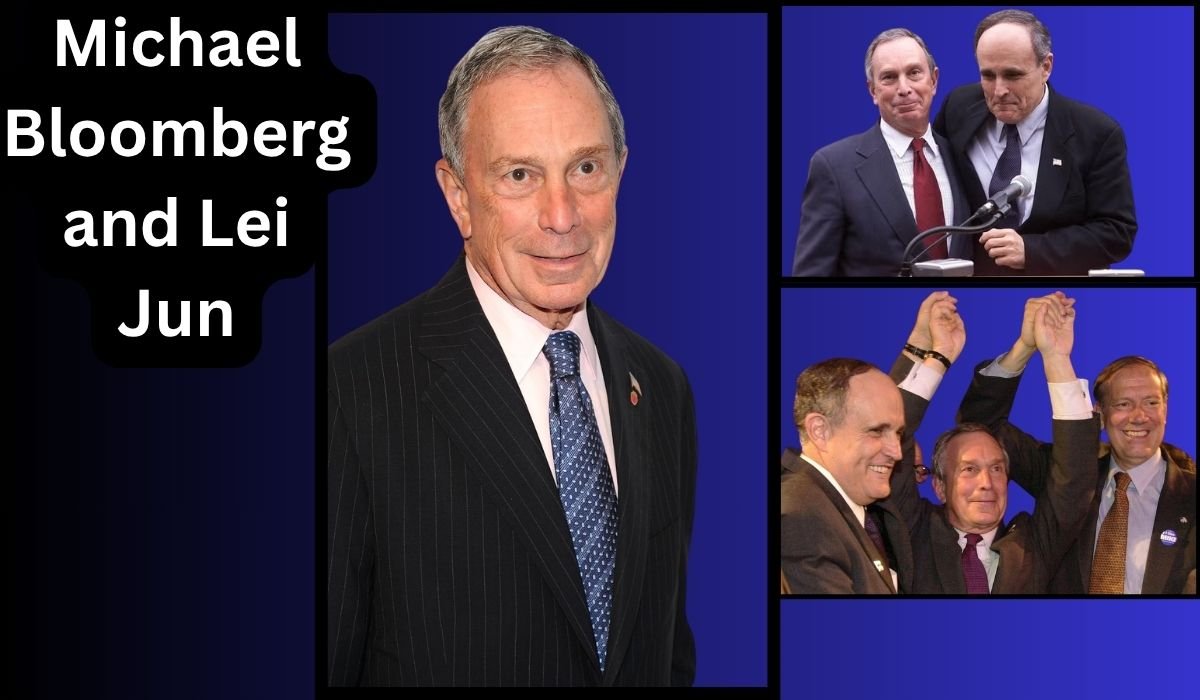
The names Michael Bloomberg and Lei Jun rarely appear in the same sentence, yet both men built companies that changed how people work and live. One shaped how traders see prices. The other put affordable phones in millions of hands. They are two global business leaders with very different stories.
This article looks at Michael Bloomberg vs Lei Jun in plain terms. Let’s start with what readers ask first. We’ll cover where each man started, what he built, and how he leads. By the end, you’ll see what their journeys share and what you can borrow for your own work.
Are Michael Bloomberg and Lei Jun Connected?
Short answer: no. If you wonder are michael bloomberg and lei jun business partners, there’s no public record of a deal between them. They run separate companies in separate countries.
People also ask did bloomberg and lei jun work in the same industry. Not really. One built a data business for finance, while the other built hardware for everyday users.
- They have never worked together, launched a joint product, or cofounded any company.
- The main similarity between bloomberg and lei jun is simple: both used software to solve a clear problem.
- Bloomberg built a financial data business in America, and Lei Jun built phones in China.
- Their customers, products, and home markets barely overlap, so a partnership isn’t an obvious fit.
Read More: Emily Threlkeld: Inside the Life of Harold Ford Jr.’s Wife
Lei Jun’s Journey in China’s Technology Industry
Who is Lei Jun? He’s a Chinese entrepreneur, born in 1969 in Hubei province, who rose from a software engineer to one of the best known tech founders in China.
As the lei jun xiaomi founder, he turned a small startup into a global brand. Ask what is lei jun best known for, and most people say affordable, well made phones.
- He was born in 1969 in Hubei province and showed an early passion for computers.
- Lei Jun studied computer science and entered the software industry straight after graduation.
- Over time he worked as a programmer, a chief executive, and an angel investor.
- He cofounded Xiaomi in 2010 with a small team of engineers and designers.
The Creation and Growth of Xiaomi
Xiaomi launched in 2010 with its own mobile operating system, then released its first phone in 2011. That’s how Lei Jun built Xiaomi: software first, then hardware, then a loyal fan base.
Today he serves as chairman of Xiaomi, which sells smartphones at fair prices. The company later grew into consumer electronics of every kind, from TVs to air purifiers.
- Its competitive pricing kept hardware margins thin and made good phones affordable for students.
- An ecosystem strategy linked phones with TVs, speakers, and many other connected products.
- Smart home devices such as cameras, lamps, and vacuums gave buyers more reasons to stay.
- Wearable technology like fitness bands brought in new users at very low prices.
| Year | Milestone | Why it mattered |
|---|---|---|
| 2010 | Xiaomi founded and its mobile software launched | Built a base of loyal users |
| 2011 | First Mi phone released | Entered the phone market |
| 2014 | Mi Band fitness tracker launched | Opened the wearable category |
| 2018 | Listed on the Hong Kong stock exchange | Raised money for global growth |
From Software to Entrepreneurship
Lei Jun studied at Wuhan University, finished early, and joined Kingsoft in 1992 as a programmer. He later became its chief executive and guided the firm to a public listing.
Those years gave him real industry experience. He learned how products ship, how teams grow, and how to handle pressure before he built a company of his own.
- He finished his computer science degree at Wuhan University in about three years.
- He became chief executive of Kingsoft in 1998 and led its Hong Kong listing in 2007.
- After stepping back, he invested early in several young internet companies.
- He recruited cofounders from large tech firms to give Xiaomi a strong start.
Michael Bloomberg and Lei Jun: Different Paths to Global Success
A fair bloomberg and lei jun comparison starts with the obvious: age, country, and market. Bloomberg is American and older, while Lei Jun is Chinese and built his firm much later.
Their stories show different paths to business success. One grew a service for professionals, and the other grew products for the public. Both still won by understanding what users needed.
- Bloomberg sells subscriptions to finance professionals who need fast, accurate information.
- Lei Jun sells devices to everyday buyers who care about price and design.
- Bloomberg began his rise inside a large Wall Street firm.
- Lei Jun began his rise inside a Chinese software company.
| Point | Michael Bloomberg | Lei Jun |
|---|---|---|
| Main company | Bloomberg L.P. | Xiaomi |
| Founded | 1981 | 2010 |
| Core product | Data terminals and news | Phones and connected devices |
| Customers | Finance professionals | Everyday consumers |
| Education | Johns Hopkins, Harvard Business School | Wuhan University |
Innovation as a Common Principle
Here are some similarities between bloomberg and lei jun. Both looked at a slow, costly market and asked how technology could make it better. That curiosity drove every big decision.
Innovation for them wasn’t a slogan. It meant shipping useful features quickly, and showing adaptability when markets, rivals, or customer habits changed. That mindset kept both firms relevant.
- Both targeted a clear pain point that customers already felt every day.
- Both kept improving their products long after the first version went on sale.
- Both hired strong teams and trusted them with real responsibility.
- Both watched user behavior closely instead of relying only on opinions.
Finance and Technology Versus Consumer Electronics
The finance vs consumer technology business gap is wide. Bloomberg sells trusted data on a subscription, so customers keep paying. Xiaomi sells hardware, so it must keep winning each purchase.
Bloomberg’s work sits in financial technology, where accuracy matters most. Lei Jun’s work sits where design, price, and speed matter most. Each field rewards a different skill set.
- Finance clients value accuracy and uptime above almost everything else.
- Phone buyers compare price, camera quality, and battery life before they decide.
- Subscriptions bring steady, predictable income for the data business.
- Hardware needs fresh models every year to keep shoppers interested.
Michael Bloomberg’s Rise From Finance to Technology
Who is Michael Bloomberg? He’s an American businessman, born in 1942, who built one of the world’s most trusted business information brands from a small start in the early 1980s.
Ask what is michael bloomberg best known for, and answers vary. Some say his financial information company, others say his time as mayor. It depends on the audience.
- Michael Bloomberg is a billionaire businessman, a former mayor, and a major donor.
- He grew up in Massachusetts and went on to study engineering.
- His company sells data, news, analytics, and software to business clients.
- He later moved into public service and then returned to his company.
Building Bloomberg L.P.
Here’s how Michael Bloomberg started Bloomberg L.P. In 1981 he left Wall Street with a payout and launched a small firm, then named Innovative Market Systems. It had one big idea.
The Bloomberg Terminal put prices, news, and analytics on one screen. It turned raw market data into action, and Bloomberg L.P. still earns most of its money from it.
- The first terminals reached clients in 1982, with Merrill Lynch among the earliest users.
- Merrill Lynch also invested in the young firm, which gave it money to grow.
- The company later added news, radio, and television to its product range.
- Bloomberg still owns most of the company and has kept it private.
| Year | Event |
|---|---|
| 1981 | Bloomberg leaves Salomon and starts his own firm |
| 1982 | First terminals installed for clients |
| 1990 | Bloomberg News launches |
| 2014 | Bloomberg returns to run the company after leaving office |
Early Career and Business Experience
He studied at Johns Hopkins University and later earned an MBA at Harvard Business School. Those years built his base in numbers and management, so Wall Street was the next step.
At Salomon Brothers he worked in trading and technology and became a partner. He saw how slow and scattered financial information was, and that gap became his opening.
- He earned an engineering degree from Johns Hopkins in 1964.
- He completed his MBA at Harvard in 1966.
- He joined Salomon right after graduating and worked there for about fifteen years.
- He left in 1981 after the firm was sold and his role ended.
What Michael Bloomberg and Lei Jun Can Teach Entrepreneurs
There are clear lessons from successful entrepreneurs like these two. Neither waited for perfect timing. Both spotted a market opportunity, tested it, and fixed problems as they appeared.
If you’re asking what entrepreneurs can learn from bloomberg and lei jun, start with focus. Each picked one problem, solved it well, and expanded only after earning trust.
- Pick a narrow problem first and solve it better than anyone else does.
- Build something people will happily pay for before you plan a bigger launch.
- Expand only after you have proof that customers want more from you.
- Keep learning from users, because markets change faster than most plans.
Combining Technology With Business Strategy
Ideas alone don’t pay bills. Both men learned to combine technology with business strategy, which means pairing a good product with pricing, sales, and support that fit the market.
Bloomberg and Lei Jun both used a technology driven approach. Here’s how to turn a technical idea into a global business: prove it locally, then scale the model carefully.
- Pair every feature with a clear price and a reason to buy it.
- Build a team that can sell and support products as well as code them.
- Test your idea in one market before you try to enter many.
- Protect quality as you grow, since trust is hard to win back.
Understanding Customers
Smart founders study how to understand customers before they build. Xiaomi built an online community where fans test early software and suggest changes every week. That loop shaped its products.
Bloomberg did something similar. He listened to traders and added requested tools, treating customer feedback as a product map rather than a complaint box.
- Talk with real users every week, not only when something goes wrong.
- Ship small updates often and watch how people react to them.
- Treat complaints as free research that points to your next improvement.
- Let loyal users spread the word, since they trust each other more than ads.
Leadership Styles and Business Philosophy
The leadership styles of bloomberg and lei jun share one thread: both stay close to the product. Neither treats the job as only a boardroom role. They like to see real results.
Their business philosophy is also practical. Both practice customer focused leadership: make something people truly need, price it fairly, and keep improving it after launch. Simple, but hard to do.
- Both leaders stay involved in product decisions instead of only reading reports.
- Both respect clear numbers and honest results over flattering stories.
- Both focus on long term trust with customers rather than quick wins.
- Both are willing to change course when facts point in a new direction.
| Trait | Bloomberg | Lei Jun |
|---|---|---|
| Style | Data first and structured | Community first and fast moving |
| Pricing | Premium subscription | Low margin hardware |
| Growth tool | Terminal and news | Ecosystem of devices |
| Public role | Former mayor and donor | Chairman and CEO of Xiaomi |
Lei Jun’s Approach
Lei Jun leads with speed and openness. He often posts about products, answers fans online, and joins launches himself, which makes the brand feel personal. Fans see a person, not a logo.
His persistence shows in how Xiaomi pushed through tough years, including a sharp slowdown in 2016 and 2017, and then rebuilt growth with new products and markets.
- He talks openly with fans and replies to feedback in public.
- He sets prices low to win trust and grow a large base of users.
- He moves fast into new product areas when he sees a gap.
- He accepts real risk when the possible reward is large enough.
Michael Bloomberg’s Approach
Bloomberg leads through systems and standards. He pushed an open office layout at his company, expected clean data, and valued clear answers over long speeches. That habit followed him into government.
His specialized knowledge of trading and systems gave him credibility. He knew what customers wanted because he had once been the customer himself. That insight shaped every product.
- He prefers open, shared workspaces so people can talk and solve problems quickly.
- He demands accuracy because wrong data can cost clients real money.
- He speaks in plain, direct language and expects the same from others.
- He puts a large share of his profits into charity and public causes.
Global Impact and Lasting Influence
Both companies now reach users far beyond their home countries. Bloomberg’s tools sit on desks in financial centers, while Xiaomi’s devices sit in pockets and living rooms around the world.
Their influence goes beyond sales. Bloomberg shaped how markets get information, and Xiaomi pushed rivals to lower prices and improve features. Many smaller firms now copy parts of both playbooks.
- Bloomberg runs offices in many countries and serves clients in major financial centers.
- Xiaomi sells its products across Asia, Europe, and other regions of the world.
- Both brands are now known by name far outside their home markets.
- Both keep investing in new product areas instead of resting on past wins.
Entrepreneurship and Long Term Expansion
A long term business strategy keeps growth steady. Bloomberg added news, television, and data products over decades. Xiaomi widened from phones to home gear, and more recently to electric cars.
Founders can learn from this pace. Add one new line at a time, protect what already works, and let each step fund the next one. Rushing usually costs more later.
- Start with one core product and make it excellent before you add others.
- Add related products slowly, so each launch supports the main business.
- Keep your main brand promise clear so customers always know what to expect.
- Reinvest earnings into the next stage of growth instead of spending them early.
Philanthropy and Social Impact
As mayor of New York City, Bloomberg served three terms from 2002 to 2013 and focused on public health, schools, and city services. His business skills shaped how he ran City Hall.
Through Bloomberg Philanthropies he has given billions to health, climate, education, and the arts, including major gifts to Johns Hopkins. Lei Jun has also supported his old university.
- Bloomberg Philanthropies backs public health, climate action, and education projects around the world.
- Tobacco control and gun safety groups have also received strong funding from Bloomberg.
- Lei Jun supported Wuhan University, the school where his own career began.
- Both men turned business success into wider influence beyond their companies.
FAQs
Are Michael Bloomberg and Lei Jun business partners?
No, they aren’t. They run separate companies in different countries and have no public joint business.
Did Bloomberg and Lei Jun work in the same industry?
Not really. Bloomberg works in financial data and media, while Lei Jun works in consumer electronics.
What is Michael Bloomberg best known for?
He’s best known for founding Bloomberg L.P. and the Bloomberg Terminal. He also served as mayor of New York City.
What is Lei Jun best known for?
He’s best known as the founder and chairman of Xiaomi. The company is famous for affordable smartphones and smart devices.
What is the main similarity between Bloomberg and Lei Jun?
Both used technology to solve a clear customer problem. They also kept improving their products by listening to users.
Conclusion
Bloomberg and Lei Jun show that there’s no single road to success. One built a premium data service, and the other built low priced devices for millions of buyers.
Still, their stories share the same base. Both spotted a real need, stayed close to customers, and grew step by step. Entrepreneurs can use that same approach, whatever industry they choose.

Andrew Scott is passionate about sharing uplifting blessings, heartfelt prayers, inspiring messages, and meaningful words that bring hope, peace, and encouragement to everyday life. Through thoughtful and easy to read content, he helps readers find comfort, gratitude, and positivity for every moment.